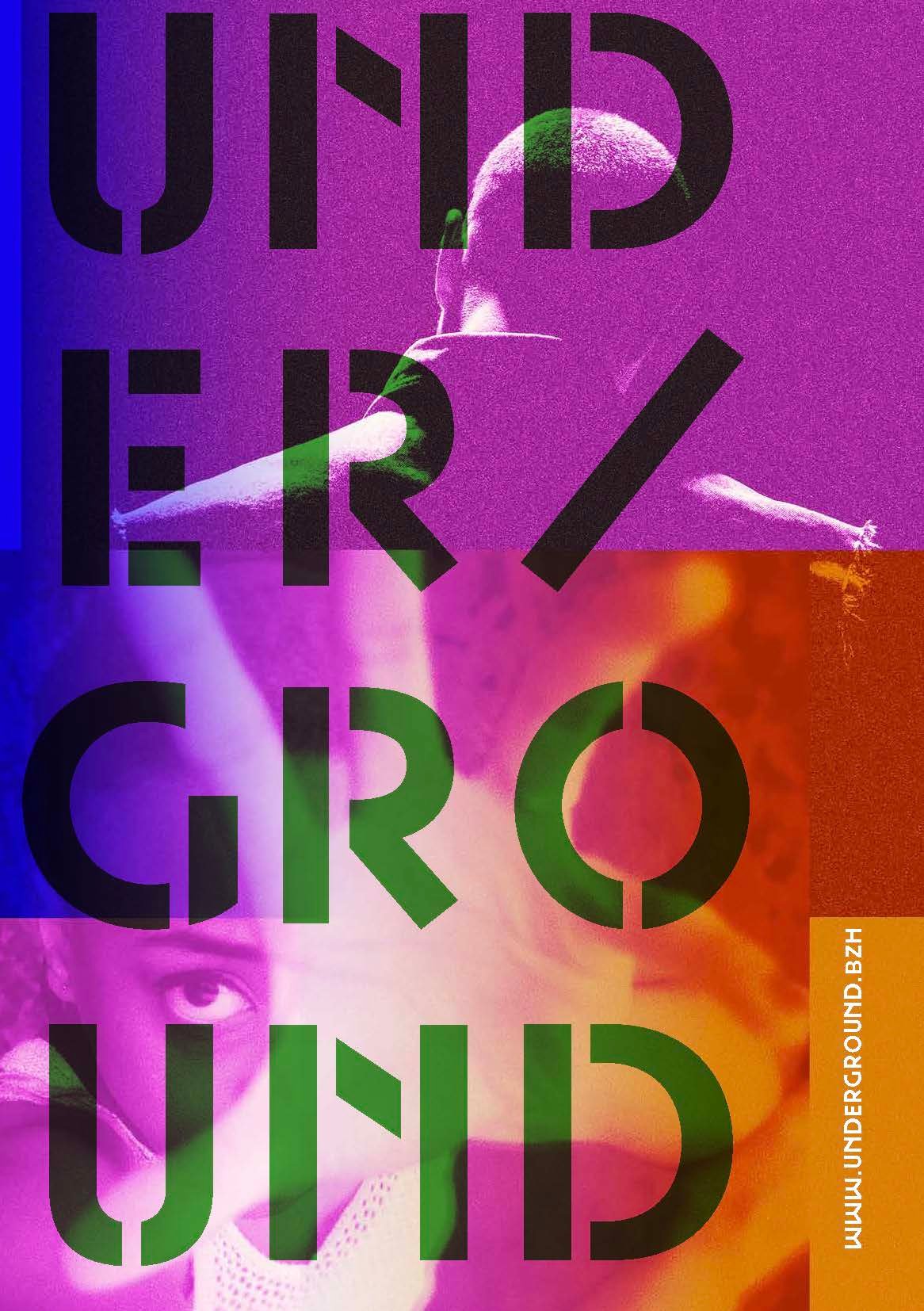
Open/Ground #1
Self-taught artists have their own ways of working. Institutions have their own habits. One day to work through the gap.
In hip hop dance, voguing, house, whacking, and many other artistic practices that have long remained at the margins, self-taught artists have developed their own aesthetic codes, creative processes, ways of passing on knowledge and building communities. Their work is increasingly circulating within institutions, yet those who create it still rarely access programming or leadership positions. Many remain precarious, with too little support to create in good conditions, while some see their activity threatened with disappearance.
This raises a number of questions for the public cultural sector: how can these artists and their communities be better recognised and supported? How can resources be distributed in an already fragile context? How can we actively contribute to renewing programming and audiences?
Process — 10:00am–1:00pm
Artists from France, Europe and further afield are invited to share work in whatever state it is in, with no imposed format: presentations can range from an initial sketch to a developed model, or simply a conversation over coffee.
With Bouzid Aït Atmane (FR), Ergao (CN), Jeannette Agbo (TG), Jérôme Oussou (FR), Inés Sybille (ES)
Tools — 2:00pm–3:00pm: Intersectional and Institutional Indicators. With Florence Cherrier.
How can we measure what a cultural policy says about itself when it claims to be inclusive? Florence Cherrier presents research conducted in Rennes in October 2025, as part of the Médusa / Mythologies inachevées residency, led by associated artists NSDOS, Sofian Jouini and Nosfell. The intersectional intentions stated by cultural institutions often remain difficult to assess, due to a lack of tools for making them tangible.
The research presented proposes a series of indicators developed at two levels: individual career paths and institutions themselves. It asks concrete questions about who programs, who makes decisions, and which criteria actually influence artistic and institutional choices. The workshop introduces the method, its limitations and its possible uses.
The talk that follows, What Place(s)? / Making Room, takes these questions further at sector level.
Talk — 3:30pm–5:30pm: “What Place(s)? / Making Room”
A generation of artists is already here: active, organised and visible in spaces that institutions have not always invested in — battles, clubs, self-organised networks and parallel circuits built without waiting for institutional recognition. The question, then, is not simply how to integrate them into existing circuits, but what their presence reveals about the ways institutions operate: our tools, our rhythms, our frameworks for recognition, what we choose to see and what we continue to overlook.
Making room can mean welcoming, but also framing, normalising and sometimes absorbing, to the point of dissolving what made a practice distinctive into formats expected by the institution. Leaving room, by contrast, often requires a genuine relinquishing of power: giving up control over time, space and resources.
13.10 | 10:00pm–5:30pm | CCN St-Melaine.
Open to cultural sector professionals and anyone concerned by these questions. Free — Booking required (Lunch on site available by reservation — paid)