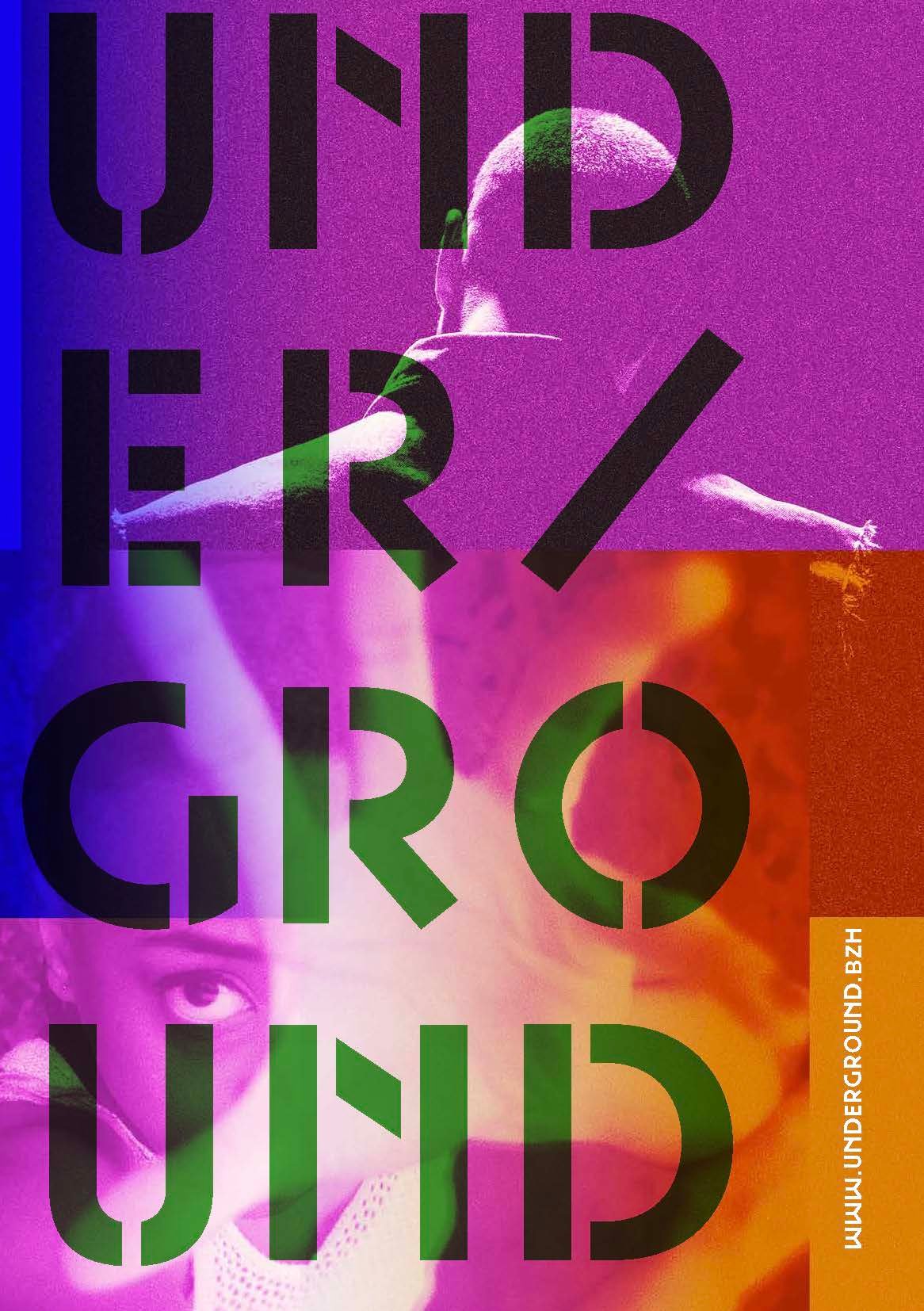
Open/Ground #3
Self-taught artists have their own ways of working. Institutions have their own habits. Four days to work through the gap.
In hip hop dance, voguing, house, whacking, and many other artistic practices that have long remained at the margins, self-taught artists have developed their own aesthetic codes, creative processes, ways of passing on knowledge and building communities. Their work is increasingly circulating within institutions, yet those who create it still rarely access programming or leadership positions. Many remain precarious, with too little support to create in good conditions, while some see their activity threatened with disappearance.
This raises a number of questions for the public cultural sector: how can these artists and their communities be better recognised and supported? How can resources be distributed in an already fragile context? How can we actively contribute to renewing programming and audiences?
Over four days, at the CCN and Hôtel Pasteur, meetings, round tables, workshops and tool-sharing sessions bring together artists, programmers, cultural policy-makers, educators and others directly concerned by these questions, to examine inherited cultural hierarchies and build new shared ground.
Process — 10:00 am–1:00 pm
Artists from France, Europe and internationally are invited to share work in whatever state it is in, with no imposed format: presentations can range from an initial sketch to a developed model, or simply a conversation over coffee.
With Benson A’Kuyie (DE), Naoko Tozawa (FR), Mounia Nassangar (FR), Philippe Almeida (FR), Karim Bouheudjeur (FR).
Tools — 2:00–3:00 pm — Attitudes Toolkit and FAIRE PLAY platform
Two tools offering organisations and professionals concrete points of reference.
The first part of the workshop presents the toolkit developed as part of the European Attitudes project, a set of practical resources to support sector professionals in projects connected to hip hop dance across Europe.
The second part focuses on FAIRE PLAY, a free collaborative platform dedicated to hip hop dance, the underground and counterculture, initiated by the FAIR-E collective and published as an Open Source project. Faced with a history long transmitted without its own archives — oral, scattered, and sometimes at risk of disappearing with those who experienced it — FAIRE PLAY raises the question of archiving as an issue of heritage transmission: documenting a culture, its pioneers, its gestures and its places, without freezing it or having it narrated from the outside.
Talk — 3:30–5:30 pm — “The Politics of Naming”
A discussion around the difficulty of naming self-taught dances rooted in hip hop cultures, club culture, queer and diasporic dynamics.
The starting point: the term “urban dance” did not emerge from reflection on the practices themselves. It was first a political invention, with the term “hip hop” considered too controversial in the 1990s, particularly because of rap, to appear in official documents. Cultural organisations subsequently adopted “urban dance”, either for convenience or by using “hip hop” as an umbrella term to bring everything together, including whacking, thereby erasing the specificity of each practice and the educational and political stakes they carry.
What concerns us is not finding the right term, but understanding why the need to name so often comes from institutions, and so rarely from the people concerned. What does this need reveal about the power to name, categorise and define others?
15.10 | 10:00 am–5:30 pm | CCN St-Melaine
Open to cultural sector professionals and anyone concerned by these questions. Free — Booking required. Lunch on site available by reservation — paid.