X

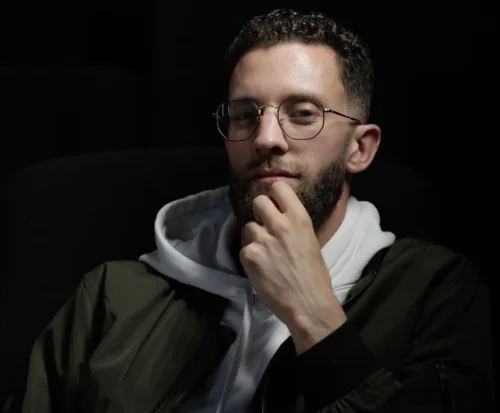
Raphael Stora

— Supported by FAIR-E / CCN de Rennes et de Bretagne.

Body, Camera, Lineage

Between cinema and hip hop, and between personal and family histories, Raphaël Stora returns to the body as a language.


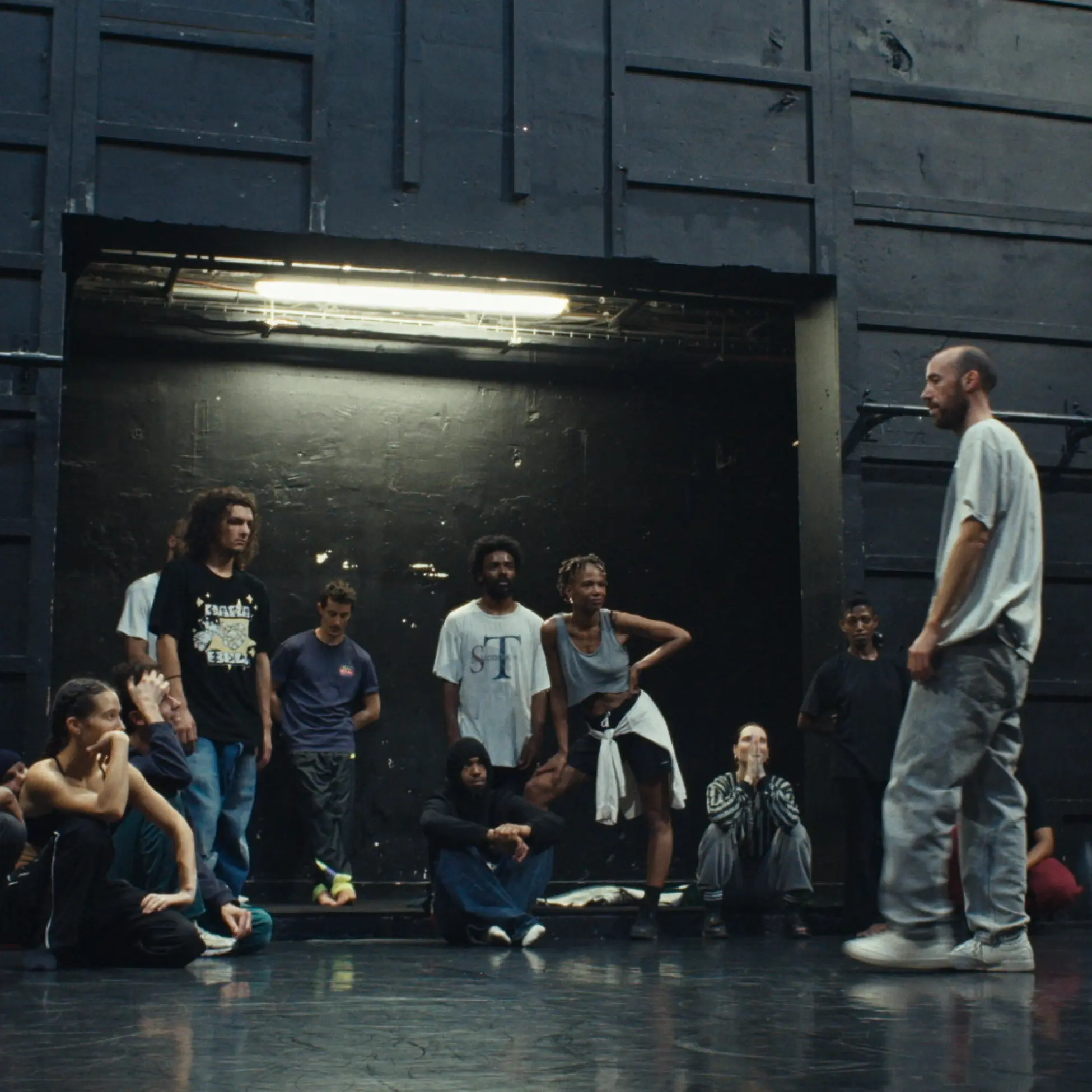
Raphaël Stora is a filmmaker and dancer. He learned to dance within the world of hip hop battles, alongside his film studies at Université Paris 8. This dual training—between the street and the film school—has profoundly shaped his gaze.

In 2017, he directed Les Promesses du sol, a documentary series broadcast on Arte, paying tribute to the Parisian hip hop scene through ten years of previously unseen archival footage. The film captures a generation of dancers still working on the margins, with a rare attention to their singularity and creative urgency.

After the series, he stepped away from dance to pursue a career in directing, collaborating with artists such as Saïdo Lehlouh, Bonnie Banane, and Ndoho Ange, among others. Yet something resisted that departure. At 40, he chose to return to the stage. The return was not without difficulty: his body had changed, the scene had evolved, and the demands of virtuosity felt more pressing than ever.

From this return emerged Les Corps électriques, a first-person documentary broadcast on Arte in 2025. The film follows this pivotal moment, shaped by doubt, trial, and encounter, alongside figures such as Saïdo Lehlouh and Suzanne Degennaro. It is also a story of lineage: the son of historian Benjamin Stora, he dances with a canvas cap on his head while his father works to make France acknowledge its colonial past. A family history marked by the death of his sister at age 12, exile in Vietnam, and the threats his father received after taking a public stance on the Algerian War.

Les Corps électriques tells of what the body repairs when words fall short, and how dance becomes, at 40, a recovered language.

Play

More to discover

Suzanne Degennaro

Suzanne Degennaro — Supported by FAIR-E / CCN de Rennes et de Bretagne The Dancefloor as Political Space Through whacking, Suzanne Degennaro has developed an artistic language in which the body becomes a...

Elamine Maecha

Elamine Maecha — Associate artist with FAIR-E / CCN de Rennes et de Bretagne Design, a Language of Its Own Graphic designer, typographer, and researcher, he deconstructs visual representations of hip hop to...

Daphné Demaison

Daphné Demaison Collectif offense From clay to stage Model maker, ceramicist, and performer, Daphné Demaison brings visual art, sculpture, and performance into dialogue in a practice that does not choose between making and...

Saido Lehlouh

Saido Lehlouh — Member of the FAIR-E collective / CCN de Rennes et de Bretagne Otherness as a Starting Point The floor as a starting point, the danced encounter as a manifesto: a...

W*ack à Rennes

W*ack à Rennes — Supported by FAIR-E / CCN de Rennes et de Bretagne Fostering an Inclusive Local Scen Rooted in club and queer cultures, W*ack à Rennes nurtures an inclusive local scene...

Ousmane Sy

Ousmane Sy — Member of the FAIR-E collective / CCN de Rennes et de Bretagne House at Heart From Antony to international stages, Ousmane Sy made house dance a unifying language shaped by...
Watch Video
View gallery
click & Drag
Close Video
View product
View event
View work
Discover artist
View more
Read post
Purchase
Click & Play
View Stores